Loading
Loading
The 2023 Fachkräfteeinwanderungsgesetz reform opened more pathways for Sri Lankan professionals to work in Germany. MALIROSA explains who qualifies and handles the document and visa process.
The Germany Skilled Worker Visa (Fachkräftevisum, §18a/§18b AufenthG) is available to Sri Lankan nationals with a recognised university degree or vocational qualification and a job offer from a German employer. The 2023 Skilled Immigration Act (Fachkräfteeinwanderungsgesetz) added an experience-based pathway for IT professionals and a Chancenkarte for job-seekers. Processing takes 4–12 weeks via the German Embassy Colombo. All guidance follows regulations from the Make it in Germany, Federal Government portal.
MALIROSA provides consulting, preparation and support services. Visa decisions are made exclusively by the responsible embassy, consulate or authority.
Considering Ausbildung as a pathway to skilled worker status? · Read verified client testimonials · How to get your Sri Lankan qualification recognised
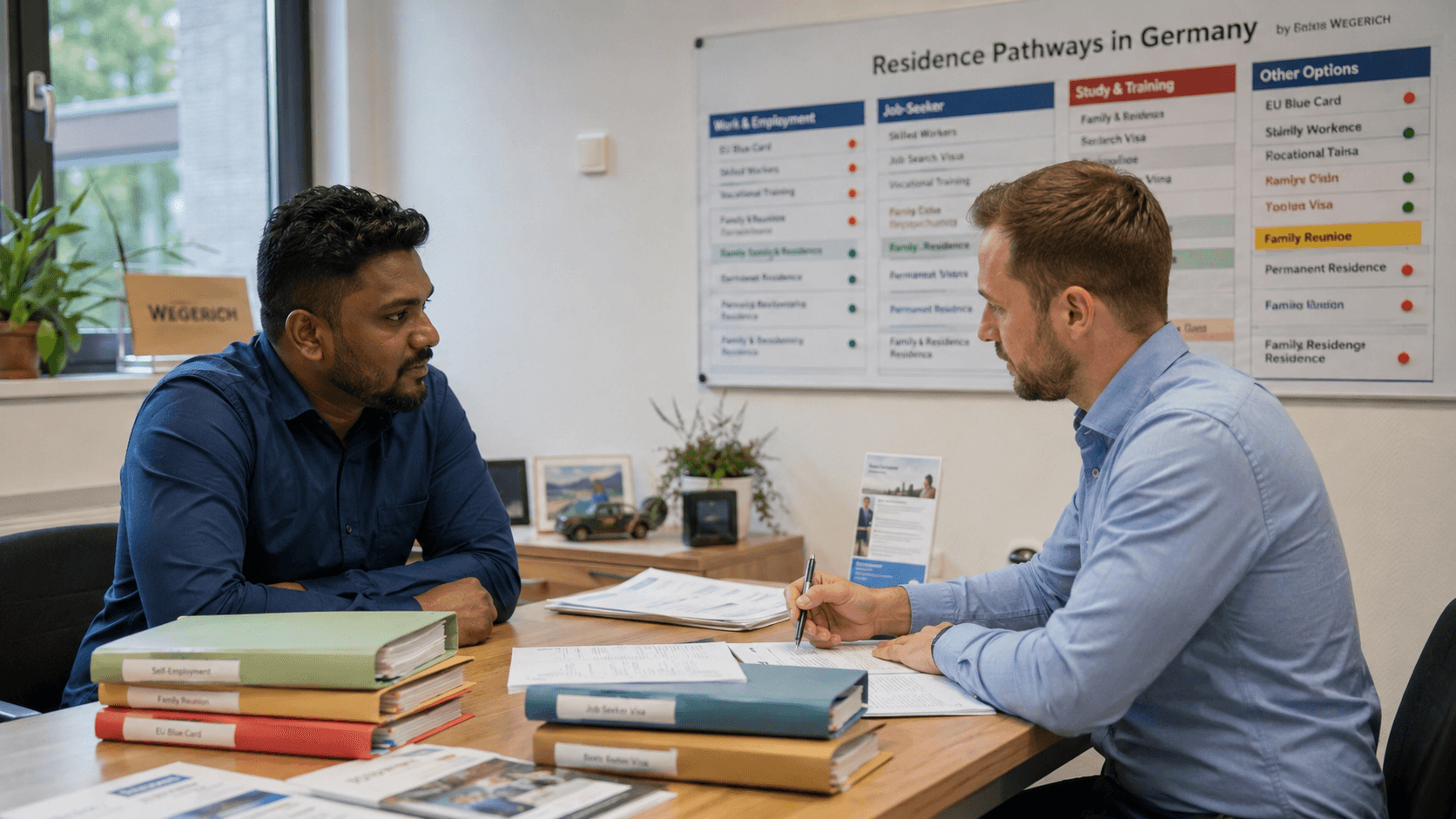
The Fachkräfteeinwanderungsgesetz reform of 2023 introduced three distinct pathways. The right route depends on your education, work experience, and profession.
Holders of a foreign university degree recognised as equivalent to a German degree. Recognition is assessed via the ANABIN database (for academic degrees) or an individual ZAB evaluation. A binding job offer from a German employer in a relevant field is required.
Holders of a state-recognised vocational qualification equivalent to a German Ausbildung. Sri Lankan vocational certificates are assessed by the relevant Landesbehörde or IHK/HWK chamber. Qualification recognition takes 3–6 months. This is the most common route for MALIROSA clients.
Official recognition decision (Anerkennungsbescheid) from the competent German authority confirming your Sri Lankan qualification is equivalent to a German standard. For academic degrees: ZAB. For vocational: IHK, HWK, or Landesbehörde.
A signed contract or formal written job offer from a German employer in a field matching your recognised qualification. The offer must specify gross salary, working hours, and job title.
B1 is standard for most roles. Regulated professions (nursing, medicine, teaching) require B2 or higher. Accepted certificates: Goethe-Zertifikat, telc, TestDaF (for academic). IT specialists on the experience-based route are currently exempt.
Before applying for the skilled worker visa, your Sri Lankan qualification must be formally assessed against the German standard. The authority responsible depends on your qualification type.
For most Sri Lankan applicants, the assessment involves submitting certified copies of degree certificates, transcripts, and sometimes employer references. Processing takes 3–6 months. Start this process first, as the visa application cannot proceed without the recognition decision.
If your degree is not fully recognised, the 2023 Act introduced a bridge pathway (Anpassungsqualifizierung) allowing you to complete gap training in Germany for up to 24 months, provided you have an employer willing to sponsor this.
Central Office for Foreign Education: evaluates university degrees. Check ANABIN database first (anabin.kmk.org).
Industry and trade chambers assess vocational certificates. The relevant chamber depends on the occupation.
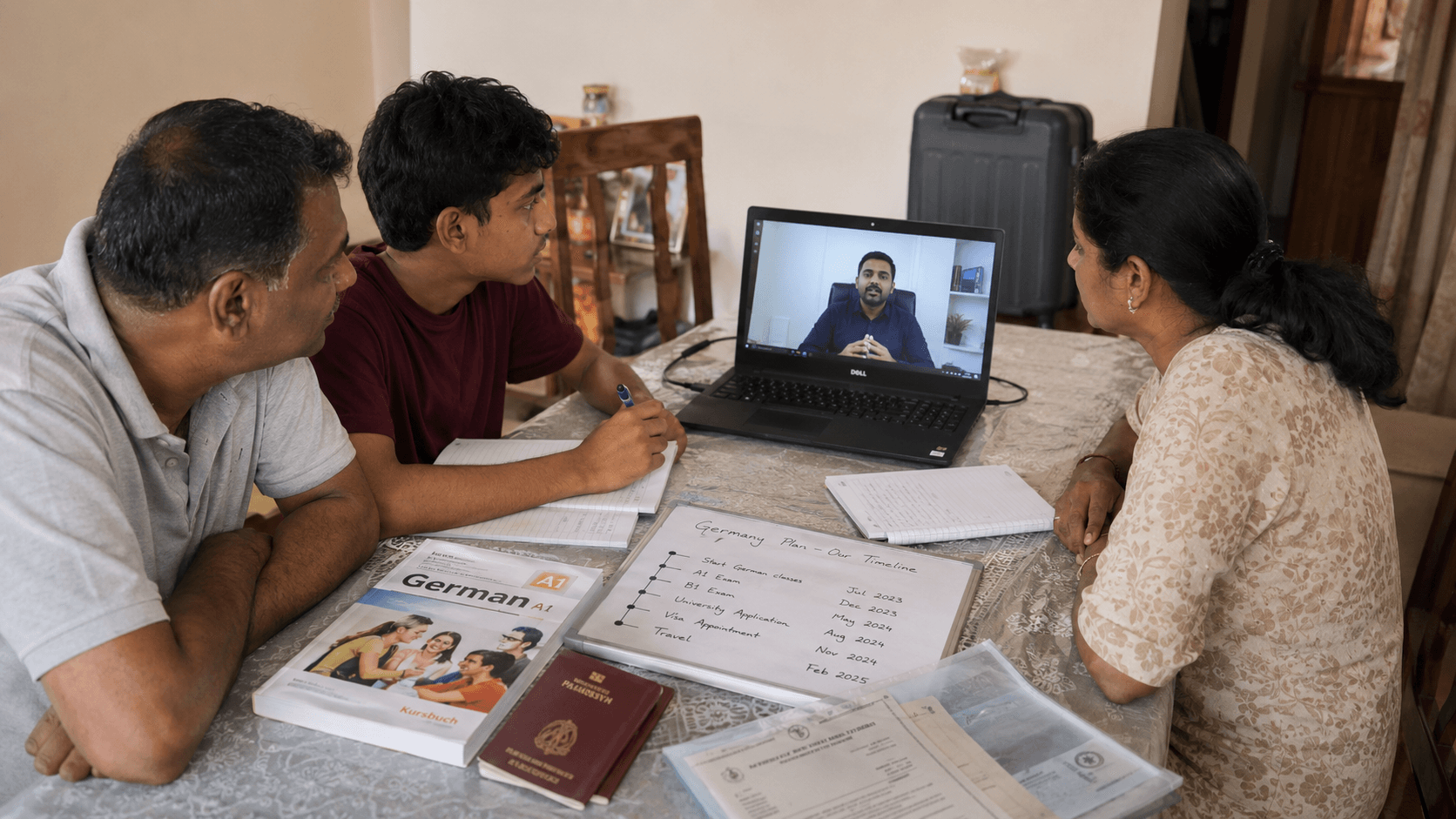
Allow 6–12 months from securing a job offer to arriving in Germany. Qualification recognition is the longest step. Start it as early as possible, ideally before you have a job offer confirmed.
The skilled worker visa process begins with a confirmed job offer. MALIROSA supports clients who come through the Ausbildung pathway and progress to skilled worker roles with the same employer. For direct applicants, the job offer must be binding and in writing before the visa application starts.
Submit your Sri Lankan degree or vocational certificate to the relevant German authority. Academic degrees go to ZAB. Vocational qualifications go to IHK, HWK, or the relevant Landesbehörde. MALIROSA provides guidance on which authority applies and what supporting documents are needed.
For most skilled worker visa categories, B1 German is required. If your recognition decision or employer requires B2, allow 4–8 months of focused preparation. MALIROSA courses run A1 to B2 online, structured for working professionals.
Many MALIROSA clients do not arrive in Germany as skilled workers on day one. The most reliable pipeline starts with Ausbildung: a 2–3 year dual vocational training program that leads directly to a German qualification, employer relationships, and a clear pathway to the skilled worker visa or permanent residency.
MALIROSA maintains connections with German employers who recruit via the Ausbildung pathway. This is the most practical route to a job offer for most Sri Lankan applicants without existing Germany connections.
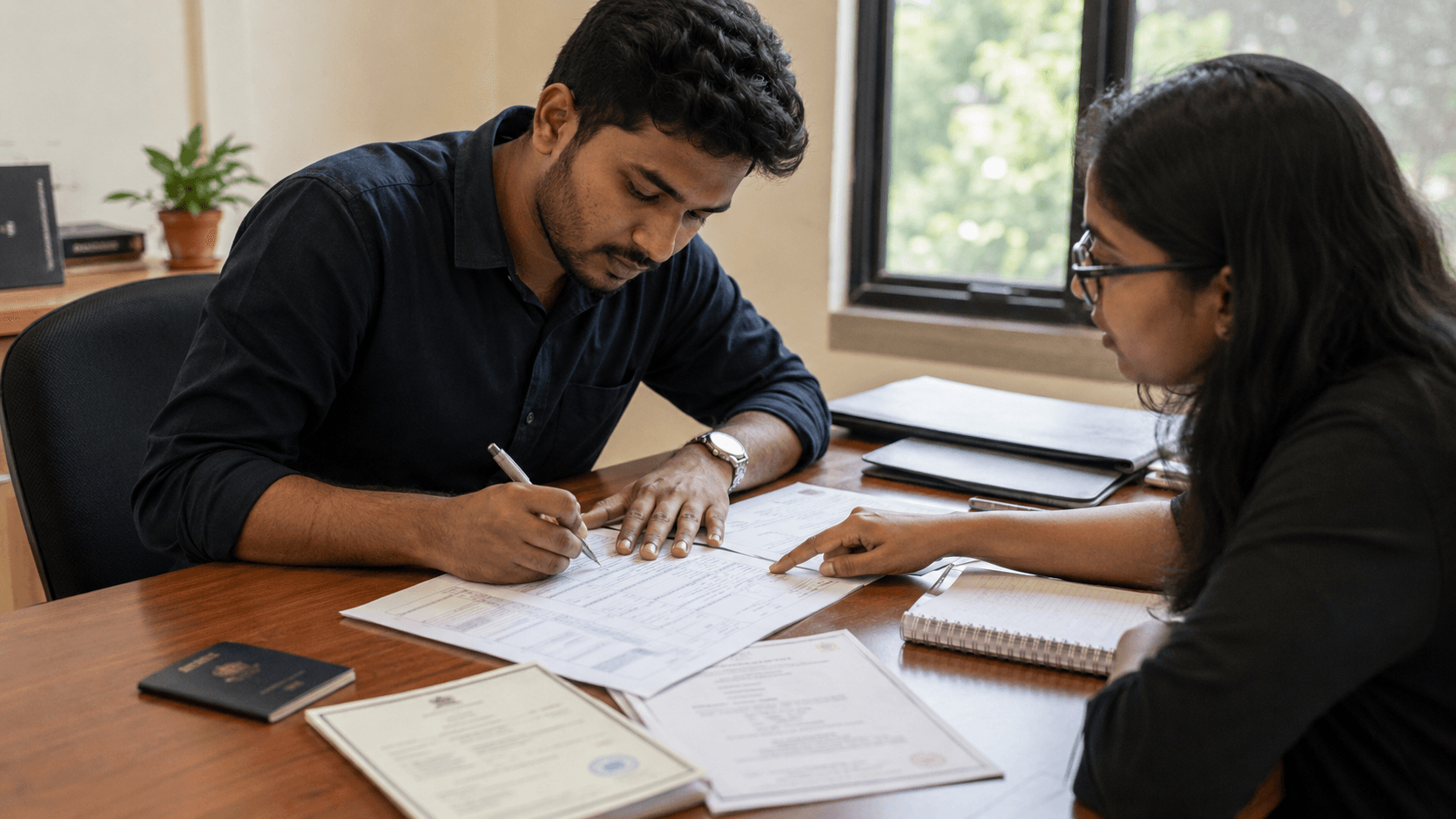
MALIROSA reviews and prepares your complete document set for qualification recognition and the visa application: certificates, translations, recognition applications, and the completed visa form.
From booking your German Embassy Colombo appointment to preparing for your interview, MALIROSA supports each step. The accelerated procedure (Beschleunigtes Fachkräfteverfahren) is coordinated with your employer.
Both permit skilled employment in Germany. The EU Blue Card (§18g AufenthG) requires a university degree and a minimum gross salary of €50,700 per year (2026). The Skilled Worker Visa (§18a/§18b AufenthG) covers both vocational and academic qualifications with no fixed salary floor, and pay must simply be appropriate for the role and sector. The Blue Card converts to permanent residency faster (21–33 months) if you also hold B1 German.
For most skilled worker visa categories, B1 German is the standard requirement. Some professions, especially regulated ones like healthcare, require B2 or higher. IT professionals without formal degrees applying via the experience-based pathway (§19c) currently require no language certificate, but having B1 significantly improves your employability. MALIROSA offers structured German courses from A1 to B2 online.
If your specific institution or degree is not listed, you can apply for an individual assessment by the Central Office for Foreign Education (ZAB) via the KMK. This Einzelfallprüfung takes 3–6 months and costs a processing fee. MALIROSA advises on whether your qualifications are likely to be recognised and which recognition pathway applies to your field.
Click the top card to explore our visa pathway guides
Explore other visa pathways
The Skilled Worker Visa requires a recognised qualification and a binding job offer. If you do not yet have either, two alternative pathways may be the right starting point: the Student Visa, for candidates accepted at a German university who want to study first, or the Au Pair Visa, for young adults aged 18 to 26 who want to build life in Germany before choosing a career path.
Register for a free consultation. MALIROSA will assess your qualifications, language level, and the most direct pathway to working in Germany.
IT specialists with at least 3 years of relevant professional experience in the last 7 years can qualify without formal German degree recognition, provided their role falls within defined IT occupation groups and the salary is appropriate. No German language certificate is legally required for this specific route.
Unlike the EU Blue Card, the Skilled Worker Visa has no fixed minimum salary threshold. The gross pay must be in line with comparable workers in Germany. For 2026, the statutory minimum wage is €13.90/hour. EU Blue Card requires €50,700/year gross.
Valid German statutory (gesetzlich) or private health insurance for the duration of the visa. Most German employers enrol skilled workers in statutory insurance (GKV) automatically once employed.
Passport must remain valid for at least 6 months beyond your intended stay. Original and a copy of all pages required at the embassy.
Two recent biometric photos, 35×45mm, meeting German embassy specifications. Must be taken within the last 6 months.
The German national visa application form (Antrag auf Erteilung eines Visums), completed in German. MALIROSA assists with accurate completion as errors are a common cause of delays.
Doctors, nurses, teachers, engineers in regulated fields apply to the relevant professional authority (Approbationsbehörde, Ingenieurkammer, etc.).
IT specialists with 3+ years of recent experience may qualify without a formal recognition decision, provided salary and job title criteria are met.
ANABIN tip: Search your university name on anabin.kmk.org before starting the process. An H+ classification with "gleichwertig" status is the fastest path to recognition.
Compile your qualification recognition decision, job offer, language certificate, passport, and photos. MALIROSA reviews the full document set against the embassy checklist for your specific visa category and ensures everything is correctly translated and certified.
Embassy appointments in Colombo currently require 2–4 months advance booking. Book as soon as your documents are ready. The accelerated procedure (Beschleunigtes Fachkräfteverfahren), initiated by your employer via the Ausländerbehörde, can reduce total processing to 4–6 weeks and costs €411.
Standard embassy processing is 4–12 weeks after your interview. Once your visa arrives, book flights and plan arrival. Within 2 weeks of arriving, register at your local Einwohnermeldeamt and enrol in statutory health insurance with your employer.
Yes. The 2023 Skilled Immigration Act introduced the Anerkennungspartnerschaft (recognition partnership). You can enter Germany on a temporary residence permit and complete a bridge qualification (Anpassungsqualifizierung) of up to 24 months to achieve full recognition. You need a German employer who agrees to this arrangement before applying.
The Chancenkarte (§20a AufenthG), introduced in 2024, allows skilled workers to enter Germany for up to 12 months to search for employment without a job offer in hand. You need to meet a points threshold covering education, professional experience, language skills, and age. MALIROSA can assess whether you qualify for the Chancenkarte as a preliminary step before a full skilled worker visa.
No. Visa decisions are made exclusively by the German Embassy and Ausländerbehörde. No consultant can guarantee a visa outcome. MALIROSA supports qualification recognition guidance, document preparation, employer matching through the Ausbildung pipeline, and visa application strategy. We are transparent about what we can and cannot control.
Voices
0+ verified reviews from students and visa clients.