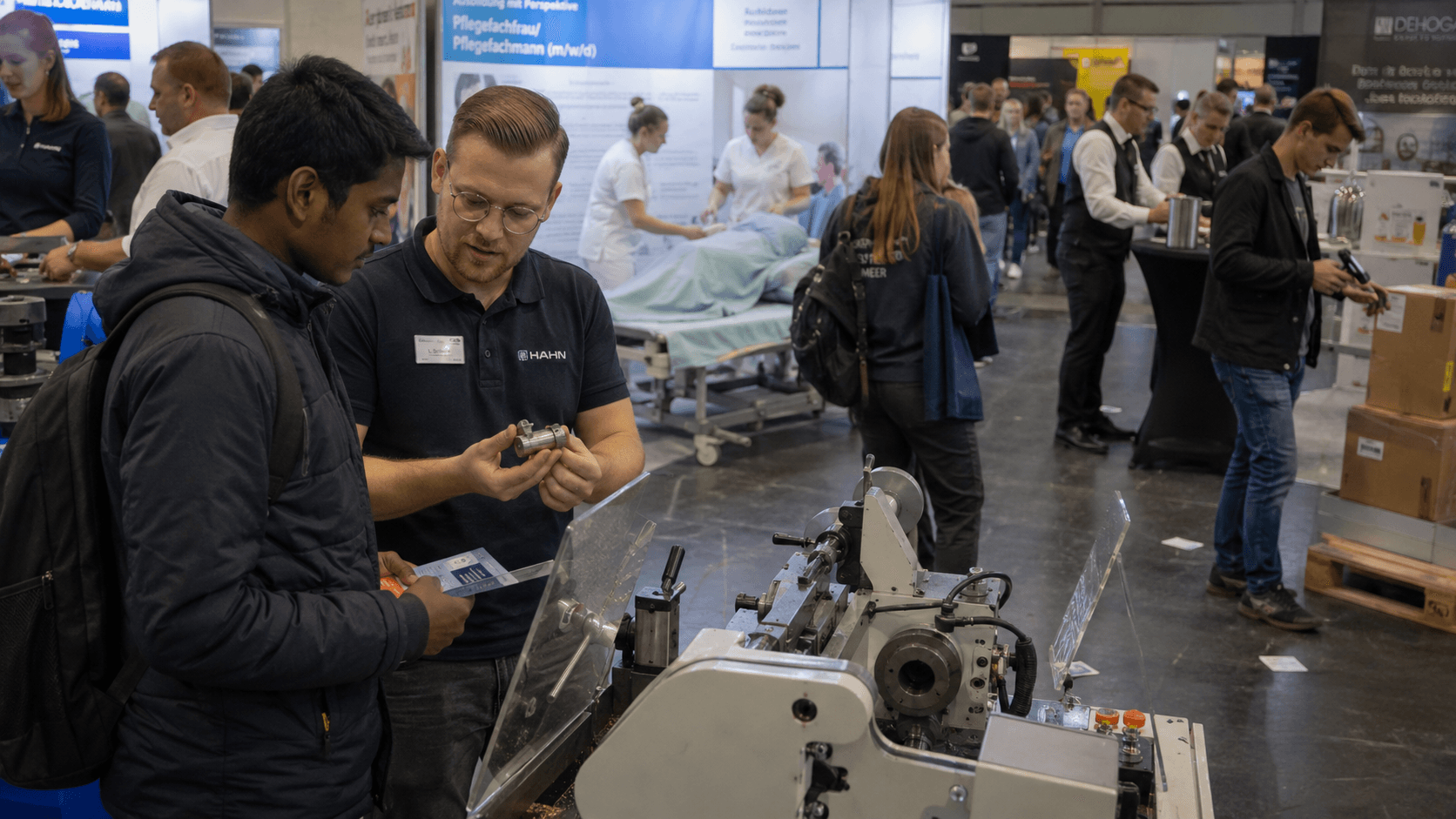
Germany posted over 73,000 Ausbildung positions in 2023 that employers could not fill with local candidates (Source: Bundesagentur für Arbeit, 2023). That shortage is not a charity; it is a business problem. German training companies need motivated people who will complete the full apprenticeship and stay on as permanent employees, and they are running structured selection processes to find them.
When a German training coordinator reviews an application from an international candidate, they are asking one question before any other: will this person actually work out? That question has four components: language, reliability, commitment, and fit.
Understanding what sits behind each of these components changes how you prepare, what you write in your application, and how you present yourself at interview. This post is based on the direct experience of MALIROSA founders Robert and Randima Saiger, who work on both the Sri Lankan candidate side and the German employer and institution side of this process.
The Real Question Behind Every Ausbildung Application Review
A German training company that takes on an international Ausbildung candidate makes a three-year investment. They train the person, pay them a monthly salary, absorb the cost of vocational school attendance, and spend considerable administrative effort managing the visa and residency requirements.
If the candidate leaves after six months, that investment is lost. If the candidate's German is not strong enough to follow the vocational school curriculum, they fail their exams and the company cannot certify the training. If the candidate struggles to integrate with the team, productivity in the placement suffers.
In 2023, German training companies reported that fewer than 1 in 5 international applicants met their language expectations at the application stage. (Source: BIBB Datenreport, 2023) Every element of the selection process is designed to reduce these three risks. Candidates who understand this structure their application to address exactly these concerns.
Language Is Not One Factor Among Many. It Is the Foundation.
In every conversation MALIROSA has had with German training companies across healthcare, hospitality, logistics, and retail, language emerges as the primary selection criterion for international candidates. Not enthusiasm. Not paper qualifications. Language.
The reason is operational. An Ausbildung candidate works in a German team from day one. The vocational school curriculum is entirely in German. The safety instructions, team briefings, performance reviews, customer interactions, and exam papers are all in German. A candidate at B1 level can function but will struggle (Source: BIBB Berufsbildungsbericht, 2024). A candidate at B2 level can contribute and grow.
This is why MALIROSA insists that candidates reach at minimum [B1, and ideally B2, before beginning serious Ausbildung applications. Not because the visa requires it, but because the training environment requires it. A candidate who arrives at B1 and continues studying has a genuinely good chance. A candidate who arrives below B1 risks failing their first vocational school exams within months.
How German Employers Assess Reliability Before You Arrive
German professional culture places very high value on reliability and directness. Employers cannot observe your work ethic before you arrive. They look for signals in your application and interview that predict it.
- Consistent previous commitments. A CV showing consistent employment or study without unexplained gaps is a positive signal. Gaps invite questions. If you have gaps, address them directly rather than hoping they go unnoticed.
- Specific knowledge of the profession. A candidate who has researched the Ausbildung Berufsbild (the nationally standardised occupational profile published by BIBB for each of Germany's 325+ recognised training professions) and can speak to specific aspects of the training demonstrates that they are genuinely interested, not just seeking a visa pathway.
- Communication quality. Employers pay attention to how international candidates communicate in their application language, whether German or English. Clear, direct, error-free communication signals the same qualities they want on the team.
- References or verifiable experience. Any previous work experience with a named employer who can be contacted is a trust signal. Experience in a related field in Sri Lanka, even informal, is worth including if it is honest and verifiable.
Demonstrating Genuine Commitment to Staying in Germany
German employers are aware that some international candidates view Ausbildung primarily as a visa vehicle rather than a career foundation. Employers who have had this experience are cautious about repeating it.
The most effective way to demonstrate genuine commitment is through specificity. Candidates who can speak to their specific career goals in Germany, name the sector they want to develop in, explain why they chose Germany over other options, and reference their plan for the post-Ausbildung period are far more credible than candidates who express general enthusiasm.
Long-term commitment also means family commitment in many cases. A candidate who has a partner or family member already in Germany, or who has taken concrete steps toward establishing residency, is lower-risk in the employer's assessment. This is not a requirement, but it is a factor.
How MALIROSA Prepares Candidates to Meet These Expectations
MALIROSA's preparation process is built around these employer expectations. [Language training to the B2 standard](/courses) comes first because without it, no other preparation creates a credible candidate. The Motivationsschreiben coaching focuses on specificity and directness rather than general enthusiasm. The employer matching process identifies companies whose sector and training culture fit the candidate's genuine profile.
Robert Saiger's direct experience working within German institutional and employment contexts means MALIROSA prepares candidates for what German employers actually experience, not for what sounds good on paper. Randima Saiger's understanding of Sri Lankan candidates means the coaching addresses the specific gaps that consistently appear when candidates from a Sri Lankan educational background apply to German training companies.
The goal is a candidate who arrives in Germany able to contribute from their first week, communicate in German at the level the team needs, and stay for the full training period and beyond. That outcome serves the candidate, the employer, and the long-term reputation of Sri Lankan candidates in the German training market.