Why Sri Lankans Move to Germany: The Honest 2026 Case | Malirosa Pvt Ltd
Share
Life in Germany
10 min read
Why Sri Lankans Are Moving to Germany: The Honest Case for Making the Move in 2026
Approximately 15,000 to 20,000 Sri Lankans already live and work in Germany, and that number is growing. Here is the honest case for why Germany specifically: what it offers that the UK, Australia, and Canada do not, what it genuinely costs you, and which type of person it is actually right for.
Ask a Sri Lankan family which country they are considering for migration and you will hear the UK first. Then Australia. Then Canada. Germany comes up later, almost as an afterthought, until someone in the room has actually looked into it. Then the conversation changes.
Germany ranks 7th globally on the Human Development Index, ahead of the UK, Canada, and Australia. (Source: UNDP Human Development Report, 2024) Approximately 15,000 to 20,000 Sri Lankans are already living and working there as registered residents. (Source: Destatis, 2023) Germany has a structural labour shortage that has driven it to build some of the most accessible skilled-worker immigration pathways in Europe.
This post makes the honest case for Germany: five concrete reasons Sri Lankans choose it over other destinations, the real downsides that nobody puts in the brochure, and a clear-eyed look at which type of person Germany is actually right for.
Why Germany Specifically? Five Concrete Reasons
The UK requires a points-based visa with salary thresholds most new applicants cannot meet. Australia's skilled migration queue is long and expensive. Canada's Express Entry system has become increasingly competitive. Germany has a different structural problem: it needs workers and has built legal pathways to bring them in at scale.
1. The Skilled Labour Shortage Creates Real Demand
Germany had more than 617,000 unfilled job vacancies at the start of 2026, and needs approximately 300,000 skilled workers per year just to sustain its current economic output. (Source: ifo Institute and Federal Employment Agency, 2026) This is not a temporary gap. It is structural, driven by an ageing population and a declining birth rate.
Healthcare alone has roughly 46,000 vacancies. Construction, IT, logistics, and skilled trades each have tens of thousands more. This shortage is the single biggest reason Germany has expanded its immigration pathways. The Chancenkarte, the reformed Skilled Workers Immigration Act, and accelerated Ausbildung recognition all exist because Germany cannot fill its jobs with domestic workers alone.
For Sri Lankans, this means Germany is actively looking for candidates. That is a fundamentally different environment from countries where immigration is a competition between highly qualified applicants for a fixed number of slots.
2. University Education is Nearly Free
Almost all public universities in Germany charge no tuition fees, including for international students. You pay a semester contribution of 100 to 400 euros for administrative costs and student services, but no tuition. (Source: studying-in-germany.org, 2026)
Compare that to the UK, where international student tuition runs 25,000 to 38,000 GBP per year, or Australia at 30,000 to 45,000 AUD. Germany's public universities deliver European-standard education at a fraction of the cost. The catch: most degree programmes are taught in German. You need B2 or C1 proficiency to study at a German public university. English-taught programmes exist but are fewer and concentrated at Masters level.
3. Ausbildung Pays You a Salary While You Train
This is the pathway that surprises most Sri Lankans when they first hear about it. Ausbildung is Germany's dual vocational training system: a 2 to 3.5 year programme where you split time between a company and a vocational school, earning a recognised German qualification at the end.
You are employed during training. In 2026, the legally guaranteed minimum training allowance starts at 724 euros per month in year one, rising to 1,014 euros by year four. Sector averages sit closer to 850 to 1,100 euros per month. (Source: Federal Institute for Vocational Education and Training BIBB, 2026) After completing Ausbildung in nursing (Pflegefachkraft), gross salary rises to 2,800 to 3,400 euros per month. (Source: Bundesagentur fur Arbeit salary data, 2024)
Nursing, IT, logistics, engineering technician, hotel management, and catering are among the most accessible sectors for Sri Lankan applicants. After completing Ausbildung, you have a German vocational qualification and the right to apply for permanent residency after two years of employment in your trained occupation.
4. Strong Worker Protections and a Social Safety Net
Germany has legally mandated minimum wages (12.82 euros per hour in 2026), strict working-hour protections, and a social insurance system covering health, unemployment, and pension contributions for every registered worker, including trainees and international employees.
For Sri Lankan workers arriving on an Ausbildung or skilled worker visa, this means: employer health insurance from day one, paid sick leave, 24 days of statutory annual leave minimum, and access to the public pension system. The average net salary after tax in Germany is approximately 2,300 euros per month. (Source: Destatis, Federal Statistical Office, 2024) These protections apply equally to international workers. Germany does not run a two-tier system where migrants receive fewer rights.
5. A Sri Lankan Community Is Already There
With approximately 15,000 to 20,000 Sri Lankans already resident in Germany as registered residents (Source: Destatis, 2023), you are not arriving without a network. The community is concentrated in cities with strong industrial and service economies: Frankfurt, Stuttgart, Hamburg, Munich, and Berlin all have active Sri Lankan associations, Tamil cultural organisations, and informal support networks.
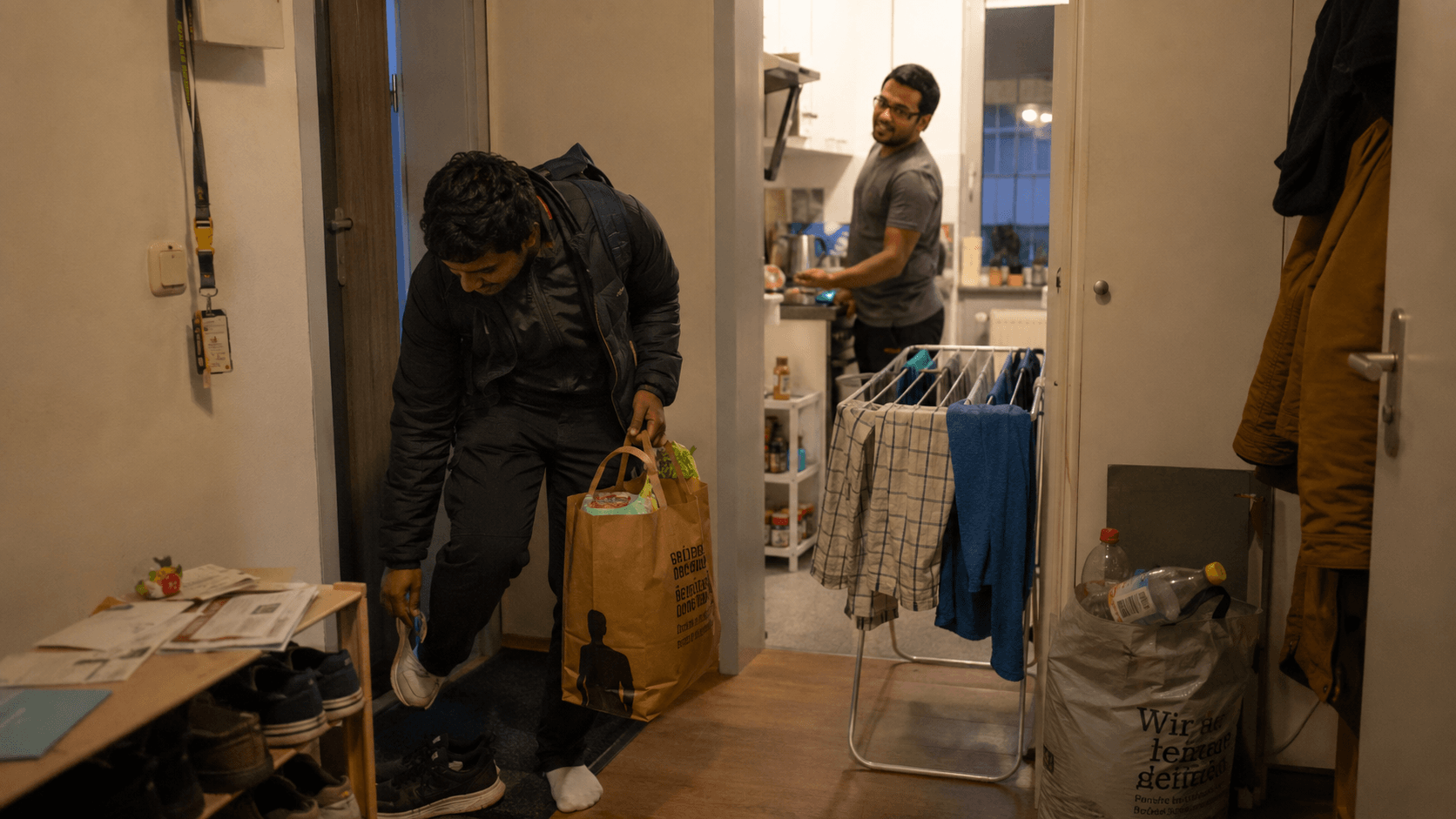
This matters practically. Finding a room when you first arrive, getting advice on the Anmeldung process, locating a Sri Lankan grocery store, or knowing which employer in your city already has Sri Lankan staff: these things are easier when someone who has done it is available to ask.
The Honest Part: What Germany Is Actually Like
Germany rewards people who prepare. It does not reward people who wing it. The bureaucracy is real, the language requirement is non-negotiable for most pathways, and the first winter in northern Germany after growing up in Sri Lanka requires genuine mental adjustment.
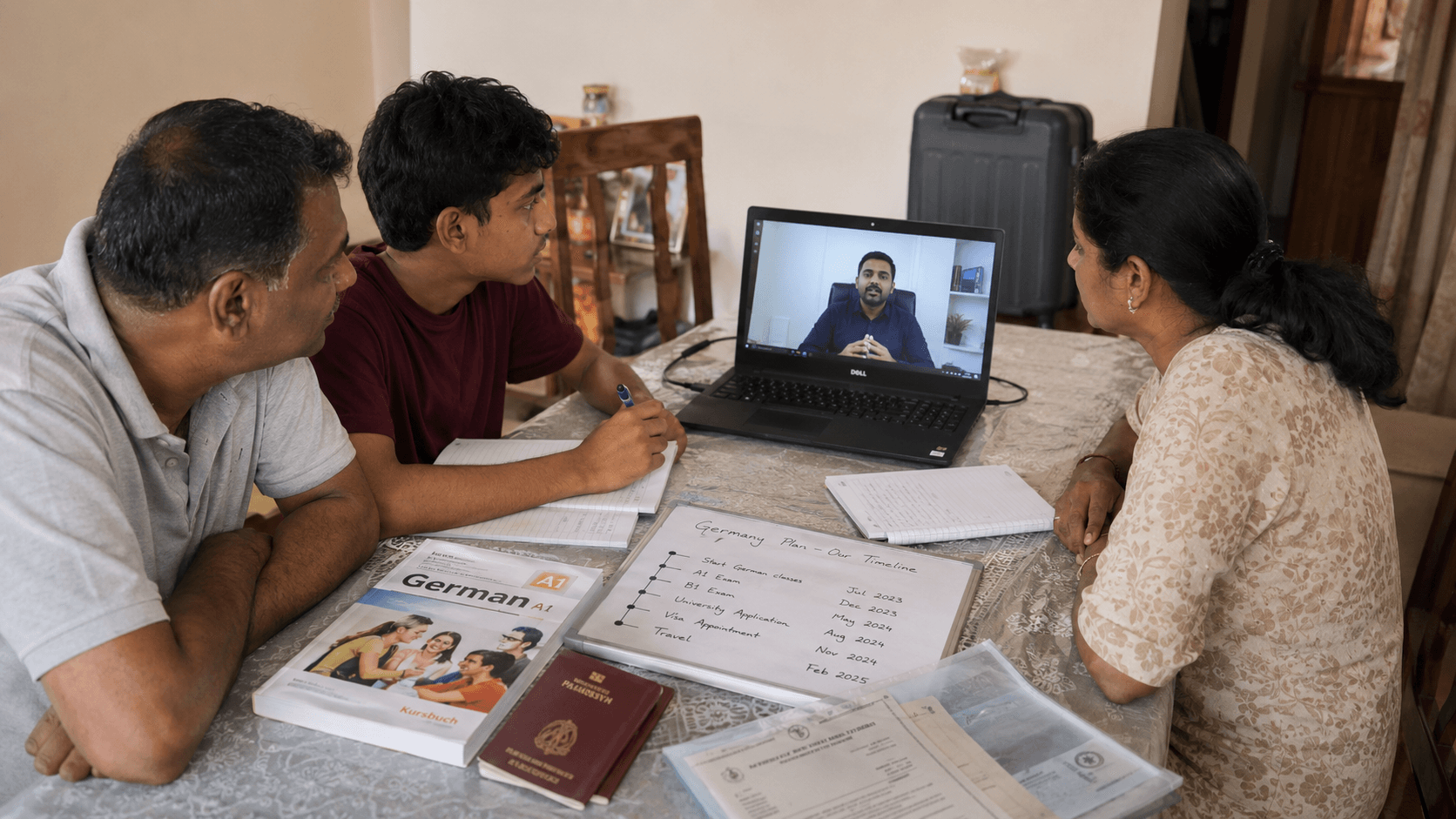
Language: German is not optional for most pathways. Student visa requires B2 for German-taught degrees. Ausbildung visa requires B1 minimum, with B2 preferred by most employers. The Chancenkarte requires B2 for competitive job interviews. The language is learnable; MALIROSA students reach B1 in 4 to 6 months of focused study, but it takes genuine commitment.
Bureaucracy: Germany runs on paperwork. Registration (Anmeldung) must be completed within 14 days of moving to a new address. (Source: Bundesmeldegesetz Section 17, 2023) Tax ID, bank account, health insurance, and residence permit all require separate appointments and specific documents. It is manageable but cannot be improvised.
Transport: The Deutschlandticket costs 49 euros per month and is valid on all regional and urban public transport nationwide, making car ownership unnecessary in most cities. (Source: German Ministry of Transport, effective May 2023)
Cost of living: Monthly costs run 850 to 1,200 euros in affordable cities like Leipzig, Dresden, and Bremen, and 1,400 to 1,900 euros in Munich or Frankfurt. Ausbildung allowances cover costs in smaller cities comfortably; Munich requires careful budgeting.
Culture adjustment: German professional culture values directness, punctuality, and written communication over verbal assurances. Sri Lankan social norms around hierarchy and indirect communication require deliberate adjustment in German workplaces.
Winter: Colombo averages 27 degrees year-round. Stuttgart in January averages 0 degrees with limited daylight. This is not a deal-breaker but it is a real adjustment that affects mood, especially in the first year. A proper winter coat before October is not optional.
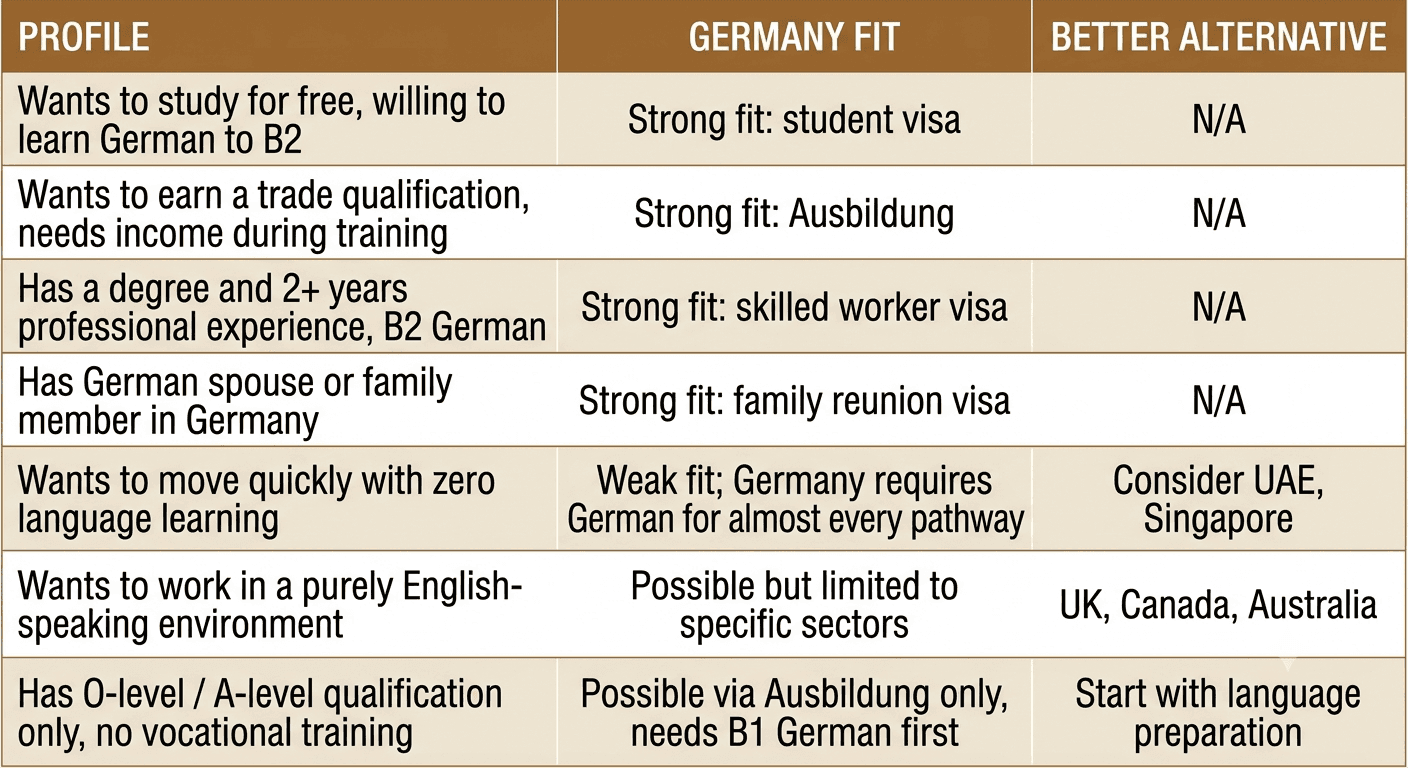
Who Germany Is Right For (And Who It Is Not)
Germany suits a specific type of person. Being honest about this saves candidates from starting a process they will not complete.
Three Sri Lankan Profiles: Which Pathway Fits Each
These are fictional but realistic profiles based on the candidates MALIROSA works with most often.
Chamara, 24, IT degree from a Sri Lankan university, one year of work experience, currently at A2 German: The Chancenkarte is the right entry point. Chamara scores enough points (IT degree plus age) to qualify. He reaches B2 German in approximately 8 months of focused study. He enters Germany on the Chancenkarte and has one year to find an employer offering a skilled worker position. IT employers in Berlin and Hamburg are actively hiring internationally.
Nishanthi, 21, A-levels completed, wants a healthcare career, no prior German: The Ausbildung pathway in nursing or healthcare assistance is the fit. Nishanthi starts German classes now and reaches B1 in 5 to 6 months, then applies for Ausbildung in nursing care (Pflegefachkraft) starting the following year. Her training allowance covers living costs in a city like Nuremberg or Bielefeld.
Priyantha, 38, married to a Sri Lankan permanent resident in Stuttgart: Family reunion visa is the most direct pathway. Priyantha needs A1 German to qualify for the visa. On arrival, he can access the government-funded Integrationskurs, which brings him to B1. He then has the right to work without restrictions.
Written by
Randima Saiger
Co-founder, MALIROSA
Randima Saiger is a co-founder of MALIROSA from Sri Lanka. She brings deep personal understanding of the Sri Lankan education system, family dynamics, and candidate aspirations, bridging local knowledge with Germany-side experience.
Approximately 15,000–20,000 Sri Lankans were living in Germany as registered residents as of 2023, according to Destatis (German Federal Statistical Office). The number has been growing steadily as Germany expands its immigration pathways for skilled workers. Communities are concentrated in Frankfurt, Stuttgart, Hamburg, and Munich.
Is Germany better than Australia or Canada for Sri Lankans?
It depends entirely on your situation. Germany has free university education, a paid Ausbildung system, and active employer demand across sectors. These are advantages Australia and Canada do not match on cost. The critical difference is language: Germany requires German for almost every pathway. If you are willing to invest 6 to 12 months in language learning, Germany offers a more accessible and affordable long-term path than the points-based systems of Canada or Australia.
What German level do I need to move to Germany?
It varies by pathway. Family reunion visa requires A1. Ausbildung visa requires B1 minimum (most employers want B2). Student visa for German-taught degrees requires B2 or C1. The Chancenkarte requires B2 to be competitive in job interviews. Language course visas require no prior German but you must be enrolled in a course. MALIROSA students typically reach B1 in 4 to 6 months of focused study from A0.
Can I get permanent residency in Germany as a Sri Lankan?
Yes. After 4 years of legal residence on a work or study permit (or 2 years for Ausbildung graduates working in their trained occupation), you can apply for a settlement permit (Niederlassungserlaubnis). German citizenship is available after 5 years of legal residence with demonstrated language skills (B1 minimum) and financial self-sufficiency. This was reduced from 8 years under the 2024 nationality law reform.
Is it hard to find a job in Germany as a Sri Lankan?
Germany had over 617,000 unfilled vacancies at the start of 2026 across healthcare, construction, IT, logistics, and trades. (Source: ifo Institute / Federal Employment Agency, 2026.) Sri Lankans with German language skills and relevant qualifications are competitive candidates. The challenge is not job availability; it is having the language skills and recognised qualifications. Both are achievable with 6–18 months of preparation.
We guide you from application to arrival. Tell us your qualifications, current German level, and when you want to move, and we will give you a specific pathway recommendation in writing within 48 hours. No generic overview. A clear answer for your situation.
How to Move to Germany from Sri Lanka: Your Complete 2026 Pathway Guide
Germany had 1.73 million unfilled skilled-worker positions in 2024. Sri Lanka has hundreds of thousands of educated, ambitious young people with limited local opportunity. This guide is the map that connects those two facts into a plan you can actually follow.
Living in Germany as a Sri Lankan: What to Realistically Expect
Germany offers stability, career opportunity, and a genuinely high quality of life. But the first year is rarely easy. This is an honest guide to what Sri Lankan candidates can expect, from the cost of a room in a German city to the Anmeldung process and finding community.
9 min read
Visa & Pathways
Family Reunion Visa Germany: Who Can Apply, What Is Required, and How Long It Takes
Germany granted over 100,000 family reunion visas in 2023. Most applicants wait between three and twelve months for an appointment at the German Embassy. Understanding the requirements before you apply can cut that wait significantly.
9 min read
Our Story
Two Worlds, One Purpose: The Story Behind MALIROSA
MALIROSA grew from a decade of living the exact journey that our candidates are about to begin: between Sri Lanka and Germany, between two cultures, two languages, and two very different sets of expectations.
5 min read
Ausbildung
How to Find an Ausbildung Employer in Germany from Sri Lanka (2026 Guide)
You cannot show up in Germany and then find an Ausbildung employer. You need a signed training contract before your visa is approved. This guide covers every active portal, how to write applications German employers actually read, and the realistic timeline from first search to visa approval.