Living in Germany as a Sri Lankan: Honest Guide (2026) | Malirosa Pvt Ltd
Share
Life in Germany
9 min read
Living in Germany as a Sri Lankan: What to Realistically Expect
Germany offers stability, career opportunity, and a genuinely high quality of life. But the first year is rarely easy. This is an honest guide to what Sri Lankan candidates can expect, from the cost of a room in a German city to the Anmeldung process and finding community.
You land at Frankfurt airport at 6:00 in the morning after a twelve-hour flight. The terminal is cold, bright, and almost completely silent. Nobody grins at you from behind the immigration desk. The officer checks your visa, stamps your passport, and says "Willkommen." That is the entire welcome ceremony. You collect your two suitcases, one full of clothes, one full of spices your mother packed, and step outside into 4°C November air for the first time in your life.
That moment is real for a lot of Sri Lankans arriving in Germany for Ausbildung or work. It is not frightening. It is just unfamiliar in a way that photographs and YouTube videos cannot fully prepare you for. What comes after that moment is the subject of this guide.
Germany ranks 7th globally on the Human Development Index, behind only Norway, Iceland, Hong Kong, Australia, Denmark, and Sweden. (Source: UNDP Human Development Report, 2024.) It offers something increasingly rare: a country where showing up, working hard, and [learning the language](/courses) actually opens doors. But the first year requires preparation. This guide draws on the experience of MALIROSA co-founders Robert (German, based in Konstanz) and Randima (Sri Lankan, now in Germany), as well as the candidates we have supported.
The Real Cost of Living
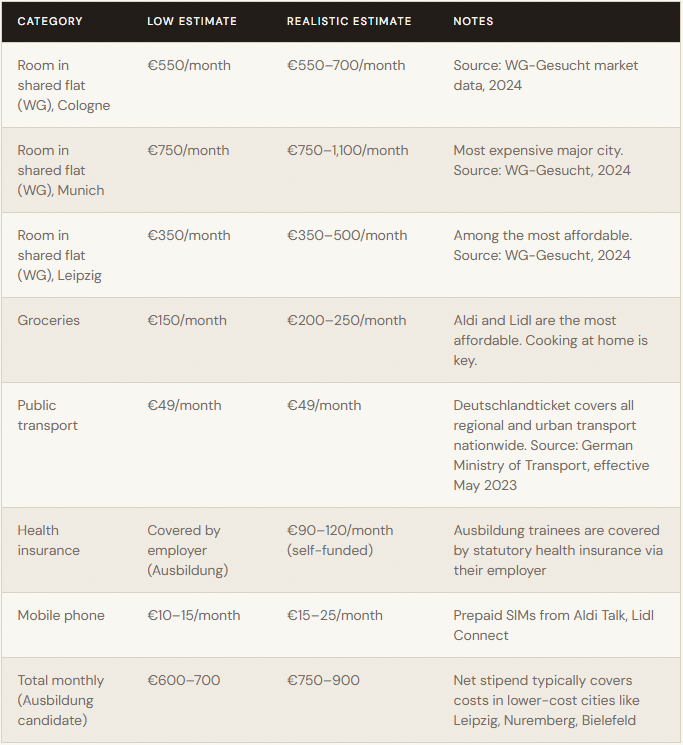
Germany is significantly more expensive than Sri Lanka, but significantly cheaper than the UK or Switzerland for equivalent quality of life. Costs vary sharply between cities. The average net salary after tax in Germany is approximately EUR 2,300 per month; Ausbildung trainees earn considerably less in their first year. (Source: Destatis / Federal Statistical Office, 2024.)
For Ausbildung candidates, the stipend is designed to cover basic living costs, especially in mid-sized cities like Konstanz, Freiburg, Nuremberg, or Leipzig. In Munich or Hamburg, costs are higher and the stipend covers less. Location matters, and it is something worth discussing with your employer before you sign.
For context: after completing Ausbildung in nursing (Pflegefachkraft), gross salary rises to EUR 2,800–3,400 per month. (Source: Bundesagentur für Arbeit salary data, 2024.) That is a significant step up from the training allowance.
Finding Housing: The Hardest Part
Finding accommodation before you arrive in Germany is genuinely difficult. Landlords typically want to see a German Schufa (credit check), proof of income, and often a German guarantor, none of which you have on arrival.
The most realistic approach for Ausbildung candidates is to ask your employer whether the company has accommodation support or knows of rooms. Many training companies, particularly in healthcare and hospitality, either provide accommodation or have contacts. Ask this during the application process, before you sign.
For the first weeks, consider short-term accommodation: youth hostels, temporary furnished rooms, or Airbnb while you search. Platforms like WG-Gesucht (shared flats), ImmoScout24, and Kleinanzeigen are the main rental search tools.
Once you have a German address, your first administrative task is the Anmeldung.
The Anmeldung: Your First Bureaucratic Hurdle
The Anmeldung is your formal registration of residence at the local Einwohnermeldeamt. Under German law, you must register within 14 days of moving to a permanent address. (Source: Bundesmeldegesetz §17, 2023.) This is not optional; you need the Anmeldung to open a bank account, receive your tax ID, and to be on record with your employer.
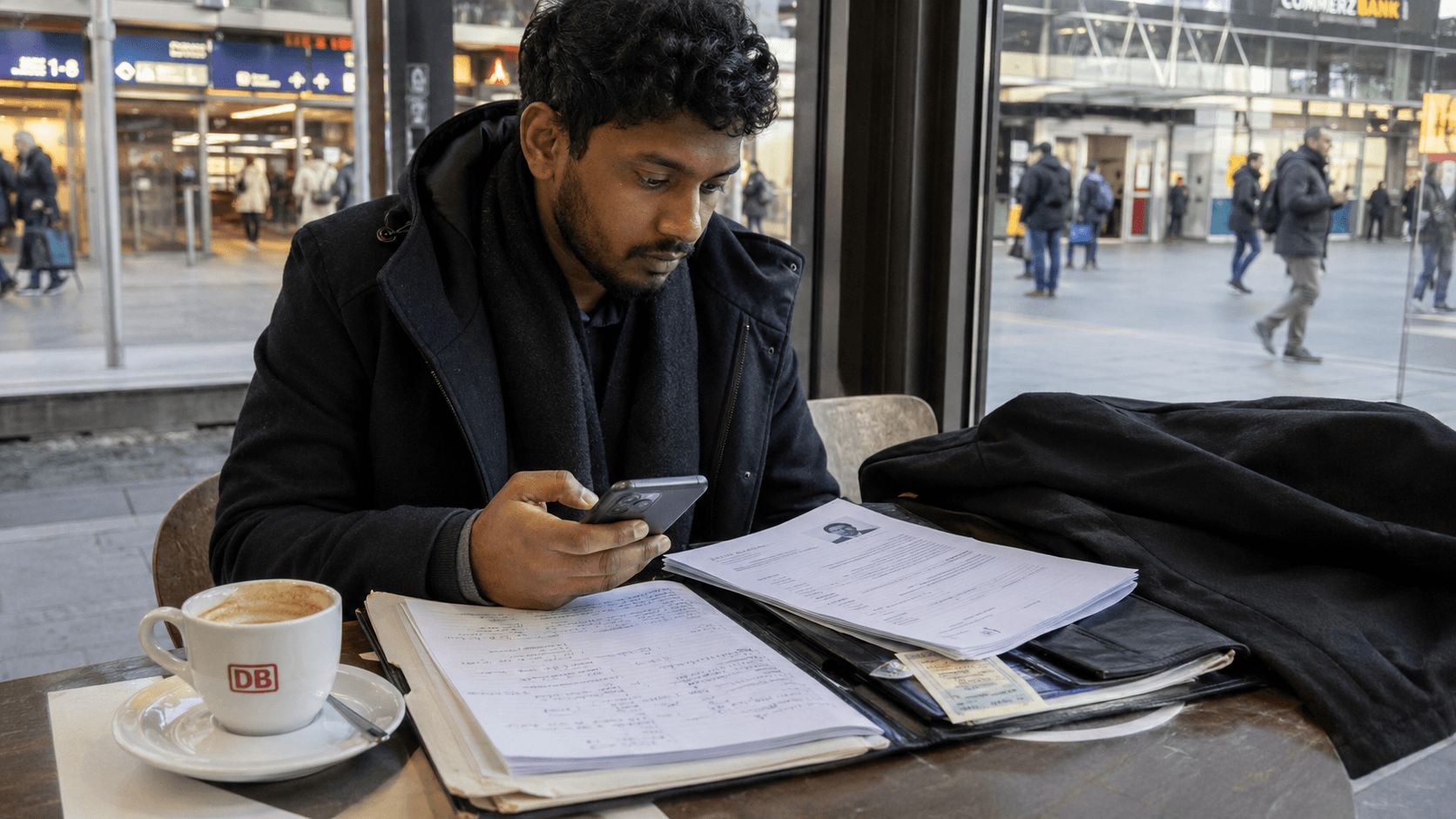
What you bring to the appointment: your passport, your lease agreement or a Wohnungsgeberbestätigung (a form your landlord signs confirming they are housing you), and the completed Anmeldung form, which you can download from your city's website in advance.
Appointments fill up fast in larger cities. Book online as soon as you have a confirmed address. In smaller towns, walk-ins are often possible. The appointment itself takes about ten minutes. You leave with a Meldebestätigung (registration confirmation). Your Steueridentifikationsnummer (tax ID) arrives by post within two to three weeks.
That tax ID is the last piece. Once you have it, give it to your employer's payroll department immediately. That is how your stipend gets taxed correctly.
Opening a Bank Account
You need a German bank account for your Ausbildung stipend. Most traditional banks (Sparkasse, Deutsche Bank) require an in-person appointment and an existing Schufa entry, which you will not have as a new arrival.
The easiest route is a digital bank. N26 and DKB have historically been accessible to new residents with a valid German address and passport. Commerzbank also offers accounts to new residents. Check current requirements, as policies change.
Aim to have an account open within your first two weeks. Your employer's payroll department needs your IBAN before your first stipend can be transferred. If you miss the cutoff, your first payment may be delayed by a full month.
Culture, Community, and the First Year
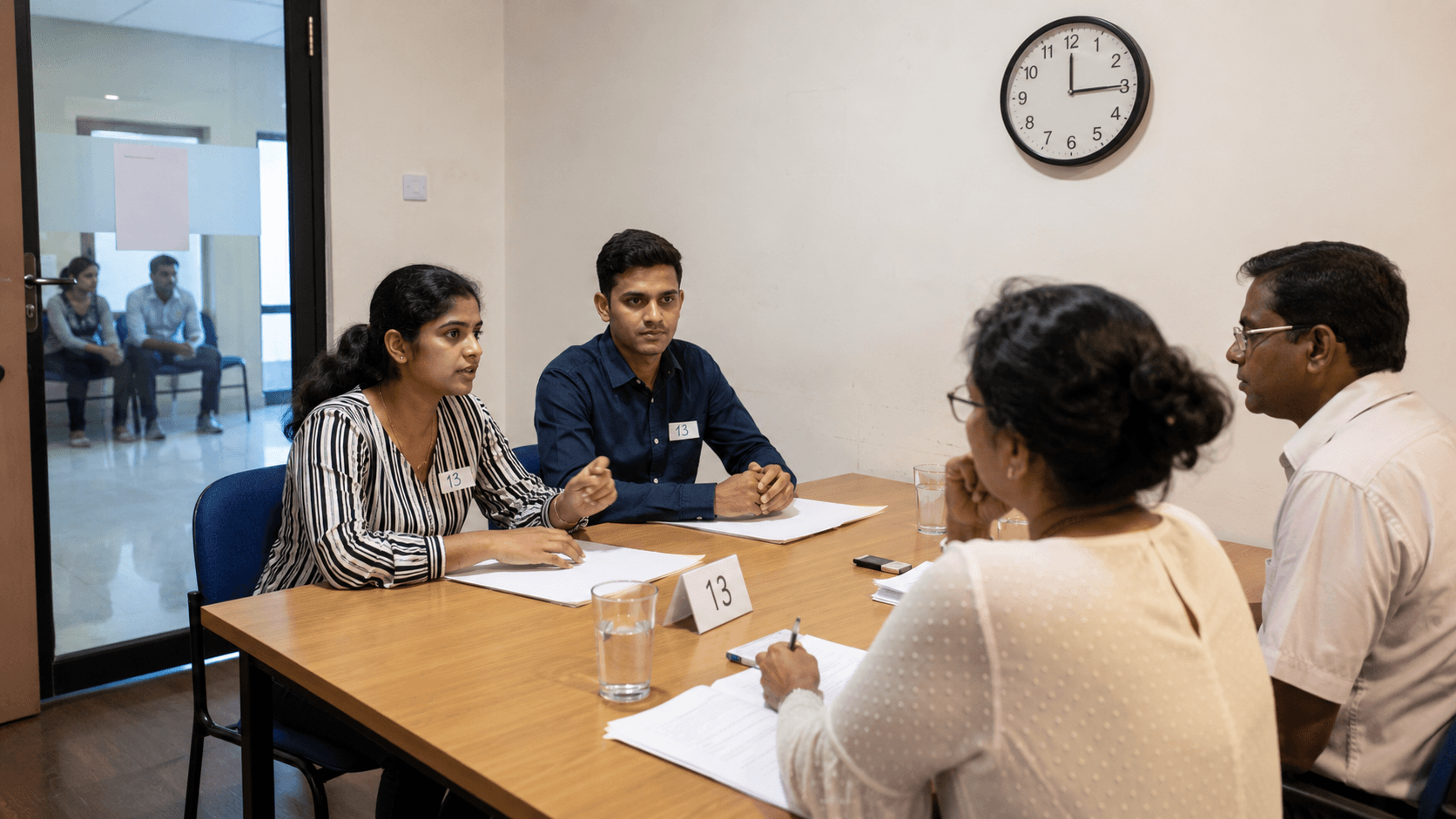
Germans are often described as reserved, and it is true that social relationships build more slowly than in Sri Lanka. Colleagues do not invite you home after the first week. Neighbours do not knock on your door with food. But once a relationship is established, through consistent presence, reliability, and honest communication, it tends to be durable. Sri Lankan candidates who have worked in Germany consistently mention German directness as refreshing, once they adjust to it.
The Sri Lankan community in Germany numbers approximately 15,000–20,000 registered residents. (Source: Destatis, 2023.) Frankfurt, Stuttgart, Hamburg, and Berlin have the largest concentrations. Online groups on Facebook and WhatsApp connect the community across cities and are genuinely useful when you need a Sri Lankan grocery recommendation, a Bürgeramt tip, or someone who has done what you are about to do.
Food is the most commonly cited adjustment challenge. German supermarkets carry rice, lentils, coconut milk, and some South Asian ingredients, but variety is limited outside major cities. Most candidates develop a rhythm of cooking from scratch and supplementing with finds from Asian grocery stores, which exist in most cities of 100,000 or more. Your mother was right to pack the spices.
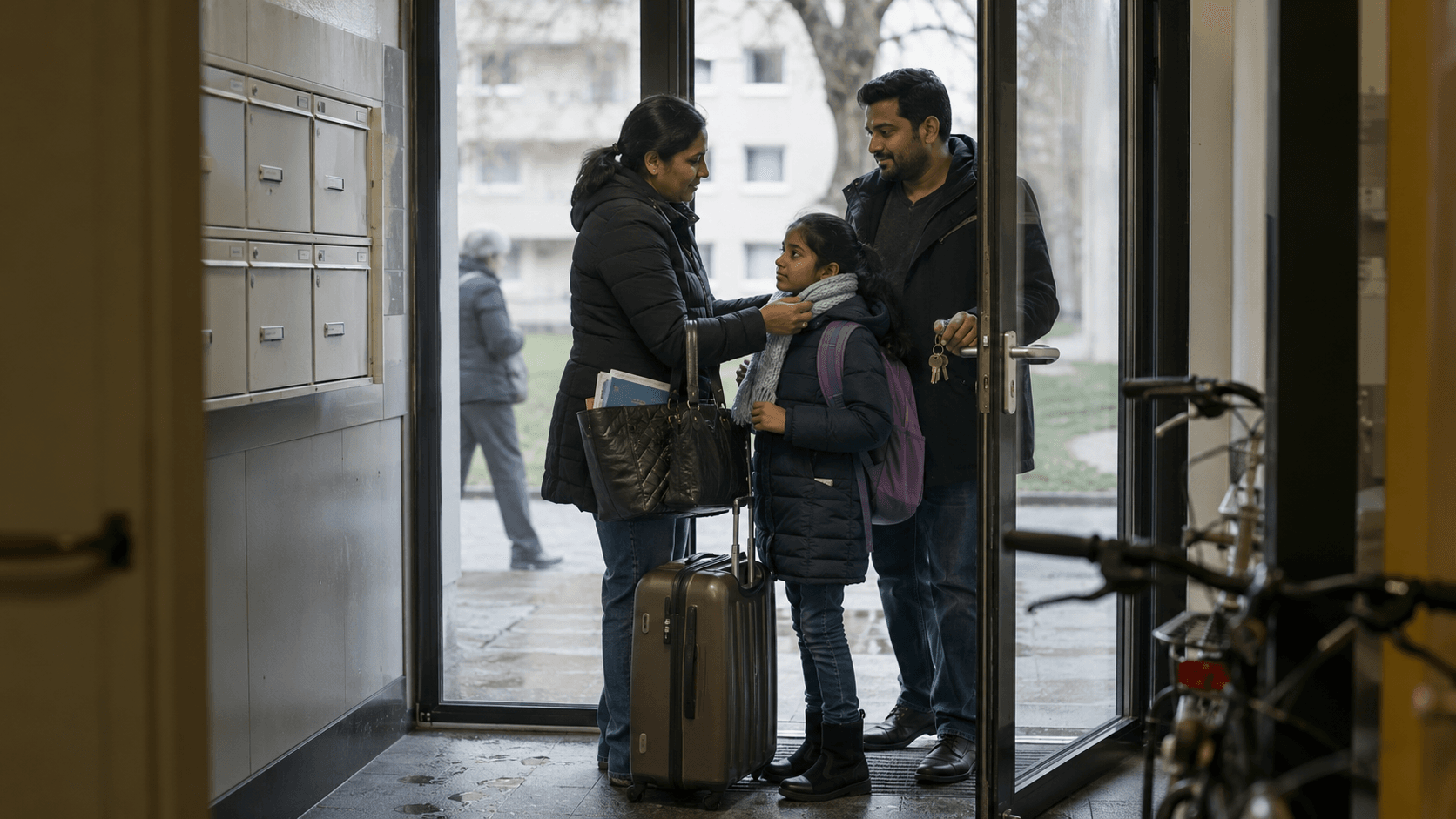
Weather is the second most commonly cited adjustment. German winters are cold, grey, and long. Cologne averages 2°C in January. Berlin is similar. You will not experience this kind of sustained cold, grey daylight until you are inside it. Invest in a proper winter coat, thermal layers, and good boots before October. This is not optional; it is a basic productivity requirement.
What Comes After the First Year?
The first year in Germany is the hardest. Most candidates describe year two as significantly easier: German feels more natural, bureaucracy is less frightening, and social relationships start to form.
For Ausbildung candidates, the training contract provides stability and structure during this period. You are employed, insured, and part of an organisation. That scaffolding matters more than it might seem when you are also adjusting to a new country.
After completing Ausbildung, the training visa converts to a work visa. From there, the path to permanent residency (Niederlassungserlaubnis) is available after 21 months of qualifying skilled work. German citizenship is available from year five of legal stay (reduced from eight years under the 2024 nationality law reform). Both timelines assume continuous legal residence and demonstrated German language skills.
Written by
Randima Saiger
Co-founder, MALIROSA
Randima Saiger is a co-founder of MALIROSA from Sri Lanka. She brings deep personal understanding of the Sri Lankan education system, family dynamics, and candidate aspirations, bridging local knowledge with Germany-side experience.
Germany is one of the safer countries in Europe by crime statistics. Racist incidents do occur, as in any country, and are more common in some eastern German regions than in western cities. Most Sri Lankan candidates in Germany report feeling safe and welcomed, particularly in the workplace. As with any major move, researching specific cities and regions is worthwhile before you commit.
How much money should I bring when I first arrive in Germany?
Arrive with enough to cover two to three months of living costs before your first stipend is paid, roughly EUR 1,500–2,500 depending on your city. This covers initial accommodation, food, transport, a mobile SIM, and unexpected administrative costs. Your employer may pay part of your first month in advance; confirm this before you travel.
Will I find Sri Lankan food in Germany?
In major cities, yes. Frankfurt, Hamburg, Berlin, and Stuttgart have Asian grocery stores with Sri Lankan staples including rice, dhal, coconut milk, and dried spices. In smaller cities, the selection is limited but Amazon.de delivers most pantry ingredients. Most Sri Lankan candidates adapt quickly and find German food more appealing after a few months than they expected.
Can my family join me in Germany once I have an Ausbildung visa?
Spousal and family reunion for Ausbildung visa holders is technically possible but practically difficult during the training period. The income threshold for family reunification is higher than an Ausbildung stipend in most cases. After completing Ausbildung and converting to a skilled worker visa with a higher salary, family reunification becomes more realistic. Discuss your specific situation with an immigration advisor.
MALIROSA supports Sri Lankan candidates from the first language lesson to the visa appointment and beyond. Submit your profile and our team will review it and respond within 48 hours with an honest assessment of your pathway and what to prepare.
How to Move to Germany from Sri Lanka: Your Complete 2026 Pathway Guide
Germany had 1.73 million unfilled skilled-worker positions in 2024. Sri Lanka has hundreds of thousands of educated, ambitious young people with limited local opportunity. This guide is the map that connects those two facts into a plan you can actually follow.
How to Apply for an Ausbildung Visa from Sri Lanka (2026 Step-by-Step Guide)
Most Sri Lankan Ausbildung visa applications are rejected not because candidates lack a training contract, but because their documents are incomplete or incorrectly certified. This step-by-step guide shows you exactly what the German Embassy in Colombo requires and how to avoid the errors that delay most applications by six months.
12 min read
Our Story
Two Worlds, One Purpose: The Story Behind MALIROSA
MALIROSA grew from a decade of living the exact journey that our candidates are about to begin: between Sri Lanka and Germany, between two cultures, two languages, and two very different sets of expectations.
5 min read
Visa & Pathways
Family Reunion Visa Germany: Who Can Apply, What Is Required, and How Long It Takes
Germany granted over 100,000 family reunion visas in 2023. Most applicants wait between three and twelve months for an appointment at the German Embassy. Understanding the requirements before you apply can cut that wait significantly.
9 min read
Ausbildung
How to Find an Ausbildung Employer in Germany from Sri Lanka (2026 Guide)
You cannot show up in Germany and then find an Ausbildung employer. You need a signed training contract before your visa is approved. This guide covers every active portal, how to write applications German employers actually read, and the realistic timeline from first search to visa approval.