Hospitality Ausbildung Germany: Hotels, Restaurants & Tourism Training | Malirosa Pvt Ltd
Share
Ausbildung
9 min read
Hospitality Ausbildung in Germany: Hotels, Restaurants and Tourism Training
Germany had 500,000 unfilled hospitality positions in 2023. Hotel, restaurant, and tourism employers are actively recruiting international Ausbildung trainees. For Sri Lankans with a service background and developing German language skills, hospitality is one of the most accessible entry points into Germany's dual education system.
Germany had 500,000 unfilled hospitality positions in 2023, the highest vacancy figure the sector had recorded. (Source: DEHOGA Bundesverband, 2023) Hotels, restaurants, and tourism businesses cannot find enough workers domestically. They are now actively recruiting internationally trained hospitality professionals for paid Ausbildung training contracts.
Sri Lanka's hospitality sector has grown significantly, with tourist arrivals exceeding 1.4 million in 2023 after post-pandemic recovery — producing a generation of internationally experienced hospitality professionals. (Source: Sri Lanka Tourism Development Authority, 2024) German employers in this sector have taken notice.
This guide explains the four main hospitality Ausbildung tracks, what each pays, what German level you need, where to find employers, and why Sri Lankan candidates are particularly well-placed for these roles.
What Is a Hospitality Ausbildung in Germany?
A hospitality Ausbildung is a three-year paid training programme under the German dual education system. You sign a training contract with an employer. They pay you a monthly stipend from day one. You alternate between working at the property and attending a vocational school (Berufsschule) for theoretical instruction.
At the end of three years, you sit a final examination run by the IHK (Industrie- und Handelskammer, the regional Chamber of Commerce). Passing the exam gives you a nationally recognised German professional qualification that is valid across all EU member states.
Germany has four primary hospitality Ausbildung tracks. Each leads to a different professional qualification and career path.
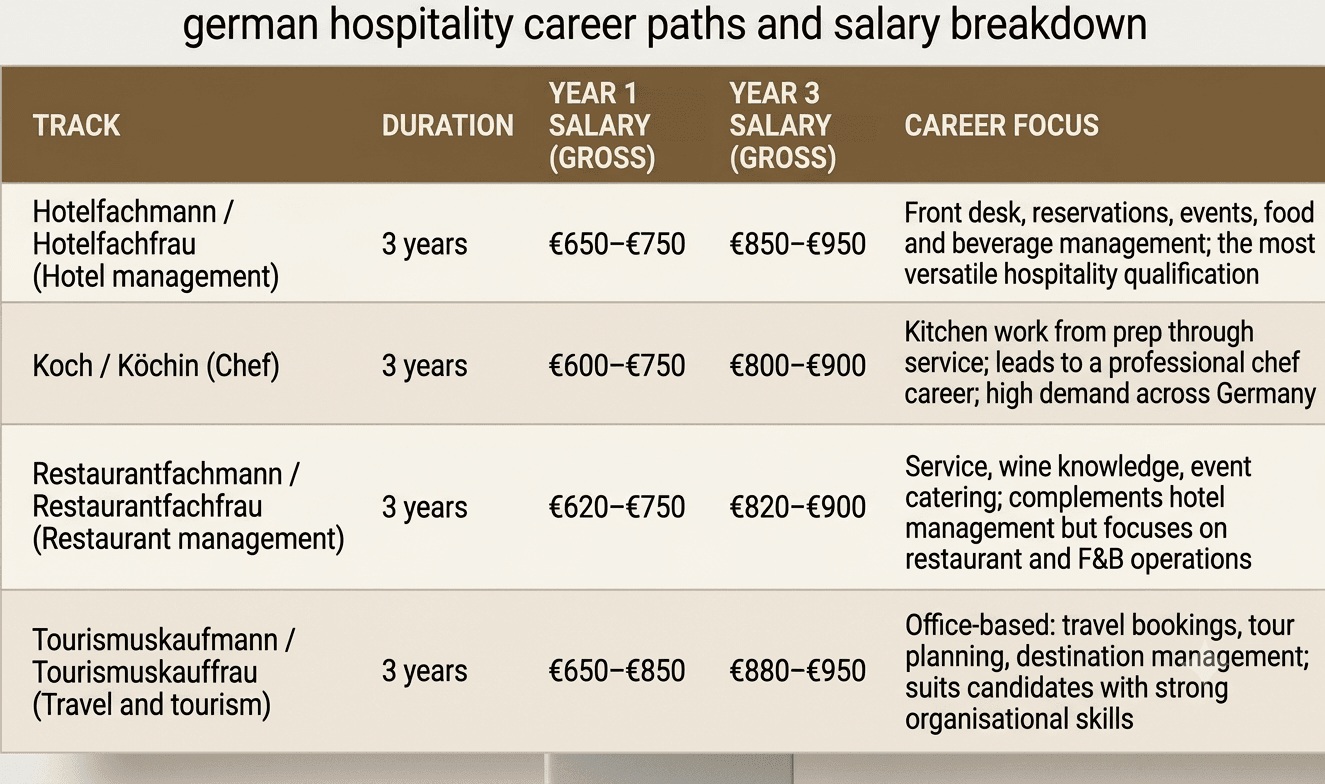
The 4 Hospitality Ausbildung Tracks: Salaries and Career Paths
Choose your track based on where your existing skills and interests are strongest. All four tracks are three years, all are paid, and all lead to IHK-recognised qualifications.
Source: DEHOGA (Deutscher Hotel- und Gaststättenverband) collective salary agreements and Bundesagentur für Arbeit sector salary data, 2024–2025. Regional variation exists: Bavaria and tourist-heavy regions typically pay 5–15% above these figures.
Hotelfachmann / Hotelfachfrau: Hotel Management Training
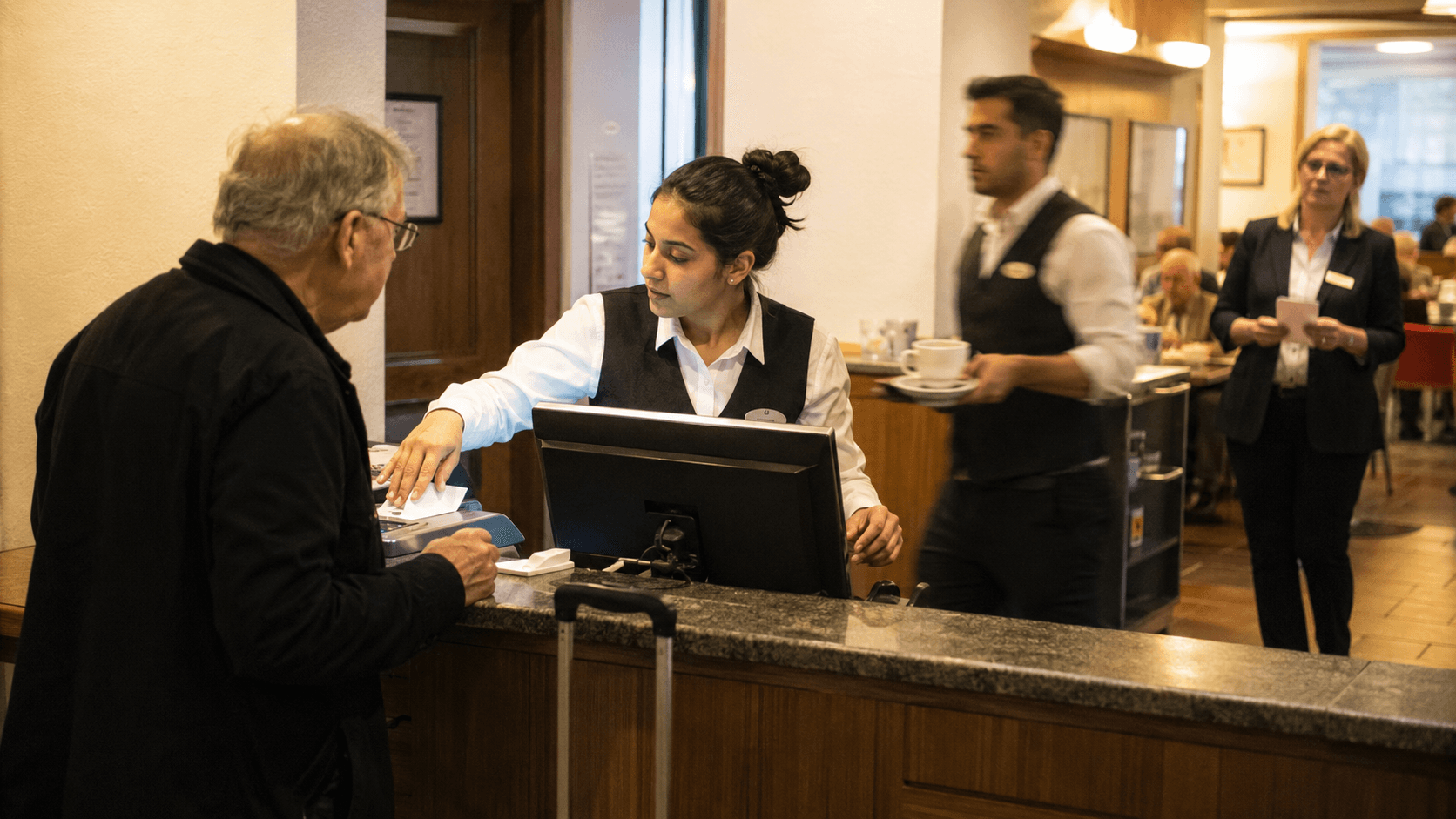
The Hotelfachmann/Hotelfachfrau qualification is the most versatile of the four tracks. You rotate through all departments of a hotel during your three years: front desk and guest services, reservations and revenue management, food and beverage, events and conferences, and back-office operations.
This rotation structure is valuable. You develop a complete operational picture of how a hotel runs. Graduates can move into department management roles within two to three years of qualifying. Senior hotel management positions in Germany pay €3,500 to €5,000+ gross per month.
Most large hotel groups operating in Germany offer Hotelfachmann Ausbildung positions. Marriott, Hilton, Steigenberger, NH Hotels, and the Intercontinental group all run structured Ausbildung programmes with dedicated training coordinators.
Koch / Kochin: Chef Training in Germany
Germany takes cooking seriously. A Koch/Kochin Ausbildung is a genuine professional training that covers classical and contemporary European cuisine, kitchen management, nutrition, cost control, and food safety.
The demand for qualified cooks in Germany is among the highest in any hospitality profession. (Source: Bundesagentur für Arbeit, job vacancy data 2024) Restaurant kitchens across Germany are chronically understaffed. For candidates with any prior cooking background, this creates an environment where career progression is faster than in many other fields.
A qualified Koch with three years of post-Ausbildung experience can earn €2,300 to €3,000 gross per month. Head chef positions in quality establishments start at €3,500 and can reach €5,000+ in high-end restaurants.
Sri Lanka has a strong culinary tradition. Candidates with prior kitchen experience, even from domestic or hospitality settings in Sri Lanka, often adapt quickly to the Koch Ausbildung curriculum.
German Language Requirements for Hospitality Ausbildung
Hospitality Ausbildung has lower German language requirements than technical or healthcare Ausbildung. This is a genuine advantage for Sri Lankan candidates who are still building their German skills.
Most hospitality employers accept candidates from A2 to B1 level. Hotels and restaurants that serve international guests regularly are often flexible about language entry level because they value multilingual candidates who can communicate with non-German-speaking guests.
The Koch track is typically the most flexible on language requirements, particularly in international hotel kitchens where kitchen communication is often a mix of German and English.
The Hotelfachmann and Tourismuskaufmann tracks require B1 as a practical minimum because guest communication, written correspondence, and administrative work demand reasonable fluency.
By the end of three years of Ausbildung — studying at a German Berufsschule and working in a German-speaking environment daily — your German will be at C1 or higher regardless of where you started.
Seasonal vs Year-Round Hospitality Contracts in Germany
Germany has two types of hospitality Ausbildung contracts: year-round and seasonal. Understanding the difference matters for your planning.
Year-round contracts are offered by city hotels, business hotels, airport hotels, and urban restaurants. These operate at consistent occupancy throughout the year and offer stable income and structured training. For international candidates on an Ausbildung visa, a year-round contract is the standard and recommended option.
Seasonal contracts are common in Alpine ski resorts (Bavaria, Baden-Wurttemberg) and lake and spa regions. These operate at high capacity for six to eight months, then close or reduce to a skeleton crew. Seasonal Ausbildung contracts do exist but they are less common and require careful visa planning.
Bavaria is Germany's strongest hospitality market by volume and has the highest concentration of hotel Ausbildung positions. Munich, Nuremberg, and the Alpine resort region all have active employer demand for international hospitality trainees.
How to Find a Hospitality Ausbildung Employer in Germany
Finding a confirmed employer is a prerequisite for your Ausbildung visa application. You cannot apply for the visa without a signed training contract. Here are the primary channels.
ausbildung.de/hotellerie: One of Germany's largest Ausbildung job boards, with a dedicated hospitality category. You can search by region, start date, and track type. Many employers list here before advertising on their own career portals.
IHK-Ausbildungsborse: Each regional IHK (Chamber of Commerce) maintains an apprenticeship marketplace. Search at ihk.de and select your preferred German state. IHK listings are particularly strong in the hospitality sector.
Direct applications to hotel group career portals: Marriott Germany (jobs.marriott.com), Hilton Germany (jobs.hilton.com), Steigenberger Hotels (steigenberger.com/career), and NH Hotels (nh-hotels.com/jobs) all maintain dedicated Ausbildung sections. These large groups actively recruit internationally and have experience processing international Ausbildung candidates.
Bundesagentur fur Arbeit: The official federal employment agency at arbeitsagentur.de lists all notified Ausbildung positions across Germany. Filter by profession and location.
MALIROSA works with verified German hospitality employers who have confirmed openings for international candidates. Applying through the MALIROSA placement programme means your application reaches employers who are already prepared to hire from Sri Lanka and have the documentation experience to process your training contract.
Why Sri Lankan Candidates Are Well-Positioned for Hospitality Ausbildung
German hospitality employers hiring internationally are not just filling a skills gap. They are looking for candidates with specific qualities that domestic candidates often lack.
English proficiency is the first advantage. Germany's hotel sector serves international guests from across the world. A Hotelfachmann trainee who can handle a guest complaint in English, direct a Japanese guest to a restaurant, or assist a French couple at check-in delivers immediate value that a monolingual German trainee cannot.
Service culture is the second. Sri Lanka's hotel and tourism sector has trained a generation of professionals in attentive, guest-first service standards. This aligns naturally with what German hotel employers are looking for in front-of-house and guest services roles.
Multilingual background strengthens the case further. Many Sri Lankan candidates speak Sinhala, Tamil, and English. In Germany's international hotel environment, each additional language is a commercial asset.
German hospitality employers who have previously hired Sri Lankan trainees typically report strong IHK examination performance. This track record matters when MALIROSA makes introductions to new employer partners.
Career Paths After Completing Hospitality Ausbildung in Germany
Completing a hospitality Ausbildung in Germany does not mean remaining in entry-level hospitality work. The qualification is a foundation for multiple progression paths.
Direct career progression: Hotelfachleute with two to three years of post-qualification experience typically move into department lead or assistant manager roles at €2,500 to €3,500 per month. Hotel general management positions at mid-tier properties start at €4,000 to €5,500.
Further education: Your Ausbildung qualification gives you access to Fachhochschulreife (technical college entrance qualification) in some states, opening the path to a Hotelbetriebswirt or hospitality management degree without returning to school from scratch.
Entrepreneurship and international movement: A German hospitality qualification is recognised across the EU. Graduates can work in Austria, Switzerland, the Netherlands, and elsewhere with the same qualification.
Continue Your Journey
Full Ausbildung preparation from language to visa.
Randima Saiger is a co-founder of MALIROSA from Sri Lanka. She brings deep personal understanding of the Sri Lankan education system, family dynamics, and candidate aspirations, bridging local knowledge with Germany-side experience.
A hospitality Ausbildung is a three-year paid training programme under Germany's dual education system. You sign a contract with a hotel, restaurant, or tourism employer who pays you a monthly stipend from day one. You alternate between working at the property and attending a vocational school (Berufsschule). At the end of three years you sit an IHK examination and receive a nationally recognised German hospitality qualification valid across the EU. The four main tracks are Hotelfachmann/Hotelfachfrau, Koch/Kochin, Restaurantfachmann/Restaurantfachfrau, and Tourismuskaufmann/Tourismuskauffrau.
What salary does a hospitality Ausbildung pay in Germany?
Hospitality Ausbildung salaries in Germany range from €600 to €900 per month gross depending on track and employer. Hotelfachmann and Tourismuskaufmann trainees typically earn €650 to €950. Koch trainees earn €600 to €900. Restaurantfachmann trainees earn €620 to €900. These figures reflect DEHOGA collective agreement rates and Bundesagentur fur Arbeit sector data for 2024–2025. Bavaria and major tourist regions pay 5–15% above national averages. After completing Ausbildung, qualified hotel and restaurant professionals earn €2,000 to €3,500 gross per month depending on specialisation and seniority.
What German level do you need for a hospitality Ausbildung?
Hospitality Ausbildung has the lowest language entry requirements of the major Ausbildung sectors. Most employers accept A2 to B1 German for kitchen and service roles, particularly in international hotel environments. The Koch track is the most flexible, sometimes accepting A2 with a clear learning plan. Hotelfachmann and Tourismuskaufmann tracks typically require B1 as a practical minimum because of guest communication and administrative responsibilities. By the end of a three-year Ausbildung in a German-speaking workplace, your German will reach C1 regardless of where you started.
How do I find a hospitality Ausbildung employer in Germany?
The main channels are: ausbildung.de/hotellerie (Germany's dedicated Ausbildung job board), the IHK-Ausbildungsborse (each regional Chamber of Commerce maintains a marketplace), direct applications to hotel group career portals such as Marriott, Hilton, Steigenberger, and NH Hotels, and the Bundesagentur fur Arbeit job portal at arbeitsagentur.de. MALIROSA works with verified German hospitality employers who have confirmed openings for international Sri Lankan candidates. Applying through MALIROSA means your application reaches employers already prepared to process international training contracts.
Can I do a hospitality Ausbildung in Germany without a degree?
Yes. Hospitality Ausbildung does not require a university degree. The standard entry requirement is completion of secondary school education (equivalent to Sri Lankan O-Levels or A-Levels). Prior hospitality work experience in Sri Lanka is valued but not required. Some employers, particularly smaller hotels and restaurants, prioritise personality, service orientation, and language learning potential over formal educational background. Hospitality is one of the most accessible Ausbildung sectors for candidates who want to enter Germany's workforce without a university qualification.
MALIROSA works with verified German hospitality employers to place Sri Lankan candidates in hotel and restaurant Ausbildung programmes.
Submit your profile — we assess your German level, match you with verified hotel and restaurant employers who have confirmed international openings, prepare your application documents and employer letter, and guide you through the Ausbildung visa process from Colombo to Germany.
Ausbildung Salary in Germany 2026: What You Actually Earn by Sector
Germany pays you from your first day of Ausbildung training. The statutory minimum in 2026 is €682 per month in Year 1. In nursing and IT it is closer to €1,100. This guide breaks down real salary figures by sector, what taxes come out, and whether the numbers actually cover life in Germany.
5 In-Demand Ausbildung Sectors in Germany for International Candidates (2026)
Germany's Ausbildung system has over 325 recognised training occupations. Not all of them are equally accessible for international candidates. These five sectors have the highest demand and the clearest pathways for motivated learners from Sri Lanka and abroad.
6 min read
German Language
What German Language Level Do You Need for Ausbildung in Germany?
The German language requirement is the single biggest factor that determines whether a Sri Lankan candidate can pursue Ausbildung in Germany. Here is exactly what level you need, why it matters, and how long it takes to get there.
10 min read
Our Story
Two Worlds, One Purpose: The Story Behind MALIROSA
MALIROSA grew from a decade of living the exact journey that our candidates are about to begin: between Sri Lanka and Germany, between two cultures, two languages, and two very different sets of expectations.
5 min read
Visa & Pathways
Family Reunion Visa Germany: Who Can Apply, What Is Required, and How Long It Takes
Germany granted over 100,000 family reunion visas in 2023. Most applicants wait between three and twelve months for an appointment at the German Embassy. Understanding the requirements before you apply can cut that wait significantly.